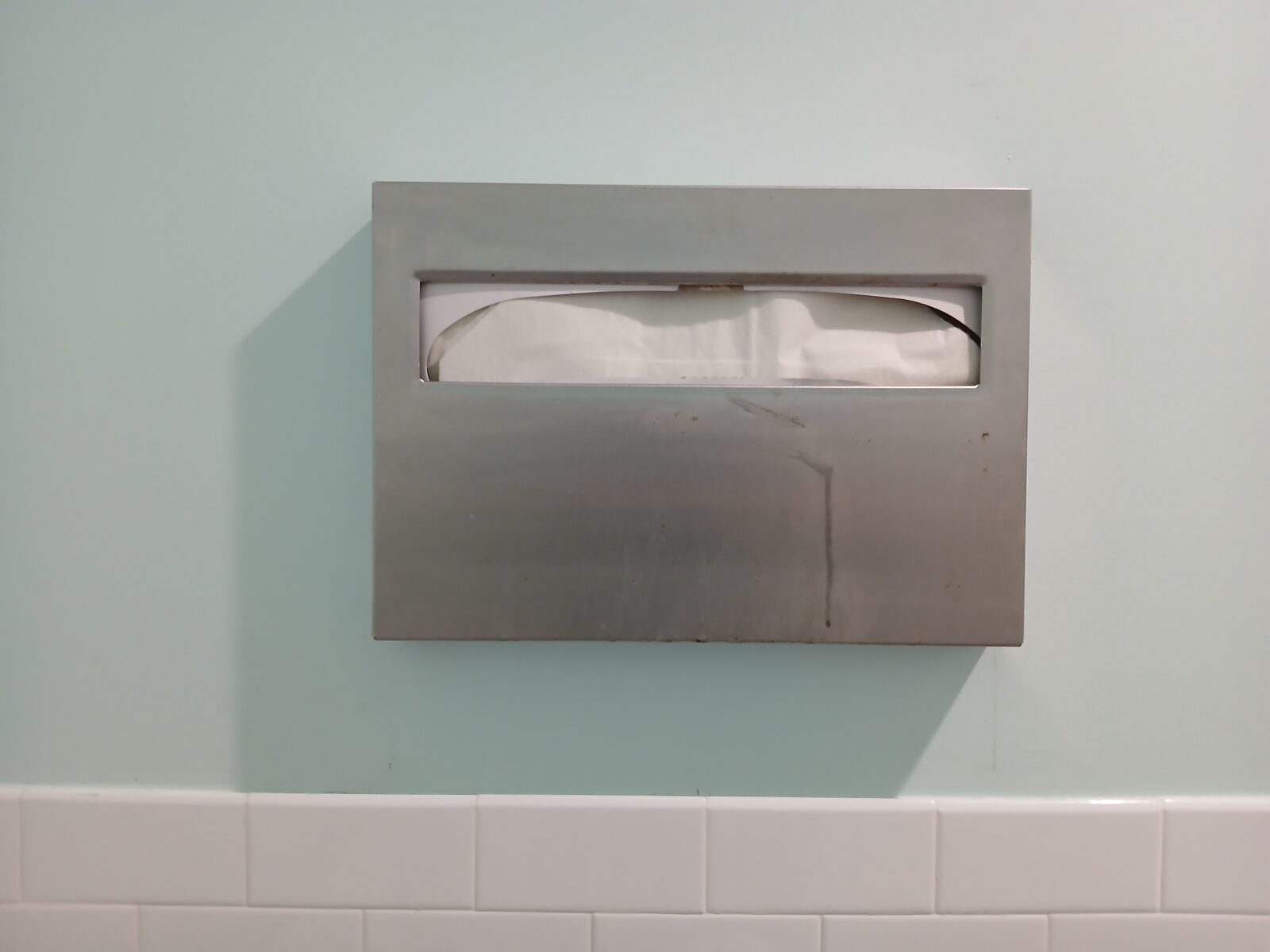
Toilet seat covers are a comfort item. Some buildings need them because users expect them. Others install a dispenser, forget the refills, and leave an empty metal box on the wall. If you are going to offer them, treat them like tissue: a dispenser, a refill, and a place on the route.
When they are worth it
Public lobbies, clinics, restaurants and tenant washrooms are where people ask for them. A back-of-house staff washroom often does not need them. Do not add a dispenser in every stall of a low-use room just to match a lobby. You will be buying paper nobody takes.
The dispenser has to match the pack
Seat-cover packs are not universal. A half-fold pack will not feed a dispenser built for a different pack, and the covers jam or fall out in a stack. Buy the refill the housing was made for, the same way you match tissue to a jumbo holder. If the housing is battered or the slot is bent, replace it. A damaged slot wastes a whole pack.
Where they go, and where the waste goes
- Mount the dispenser where a person can reach it before they sit, without blocking the grab bar or the tissue holder.
- Used covers belong in the stall waste bin or the toilet, depending on what you tell users. A cover on the floor means the bin is missing or full.
- Add the refill to the restocking checklist. An empty dispenser is worse than none, because it looks neglected.
Seat covers do not replace tissue. Keep the tissue system right first. Jumbo vs. standard toilet tissue still decides how often someone is in that stall with a spare roll.
Bottom line
Install seat covers where users expect them, buy the pack that fits, and refill them on the same route as tissue. Skip them in rooms where they will sit untouched. Tissue and dispensers are at standard toilet tissue and dispensers.
Leave a Reply