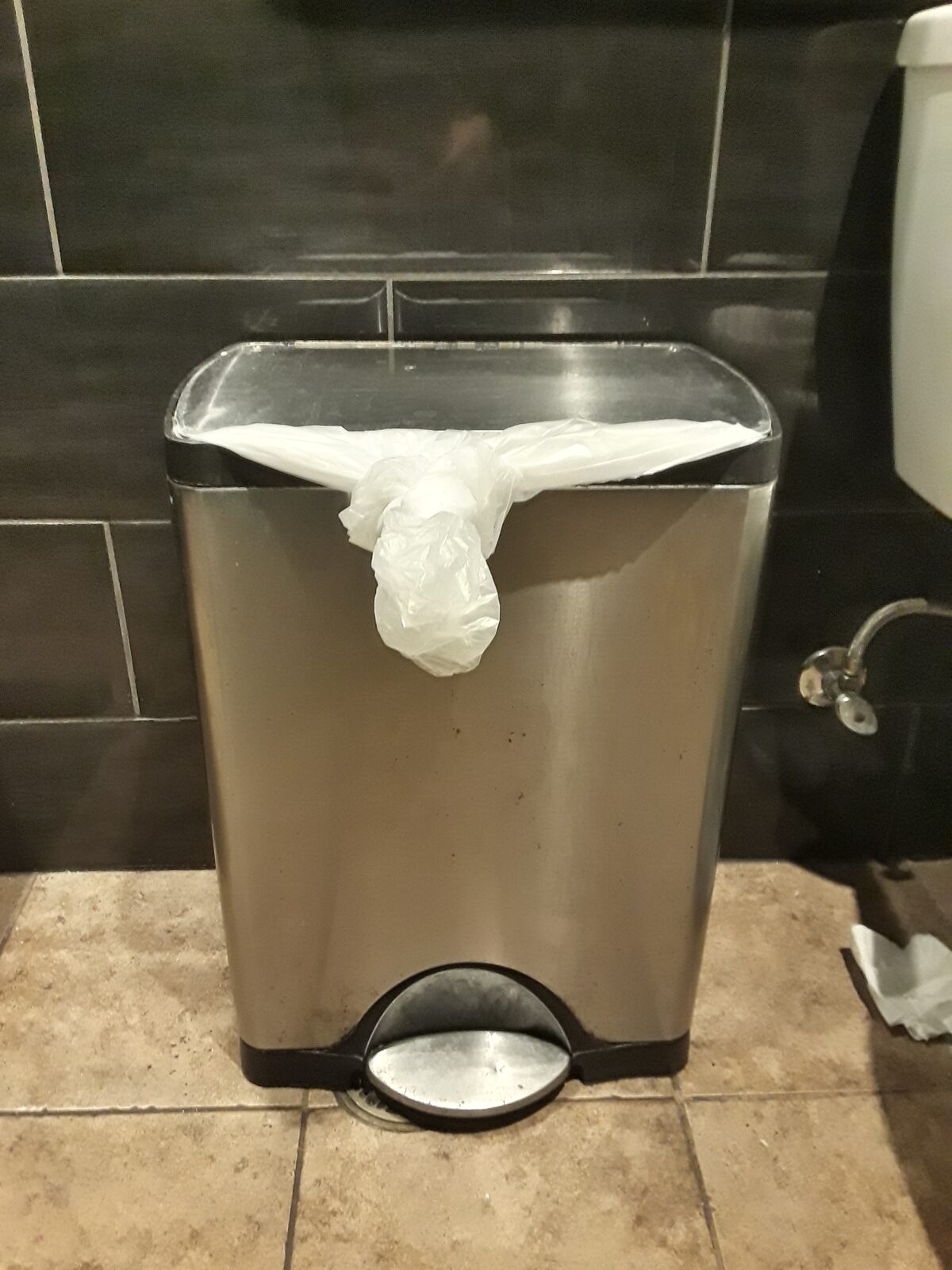
A washroom bin is doing two jobs: holding waste, and keeping that waste off the floor and off people’s hands. The liner is what makes the second job possible. Spec the bin and the bag together, or you will be buying bags that do not fit.
Fit the liner to the can
A liner that is too small slips in and dumps waste when the bag is lifted. A liner that is far too big wastes plastic and hangs over the rim, which is what you see when a bag is the wrong size. Measure the bin, buy one size that fits, and stop the closet full of leftover gauges.
Gauge follows the waste, not the price
Paper towel waste is bulky and fairly dry. A light liner often holds it. A bin that also takes food waste, wet wipes or heavy trash needs a heavier bag, or it splits on the way to the dumpster. Do not put sanitary waste in the paper-towel bin. That stream belongs in its own unit, with its own liner and service.
Hands-free matters at the sink
A lid people have to touch with wet hands gets skipped, and towels end up on the counter. A pedal or an open top is easier. Open tops fill with cups and odd waste in public lobbies. Match the opening to the room, then put the bin where a person leaving the sink actually passes it.
Build it into the route
- Empty before the bag is over full. A stuffed liner tears.
- Replace the liner every time. Do not shake and reuse a soiled bag.
- Keep the right size on the cart, not back in a distant storeroom.
This sits on the same walk as the washroom restocking checklist. If towel use drops because of a better dispenser, the bin still needs a liner. See ways to cut paper waste before you resize the cans.
Bottom line
One liner size per bin, a gauge that matches the waste, and a bin people can use without touching a dirty lid. That is the whole spec.
Leave a Reply