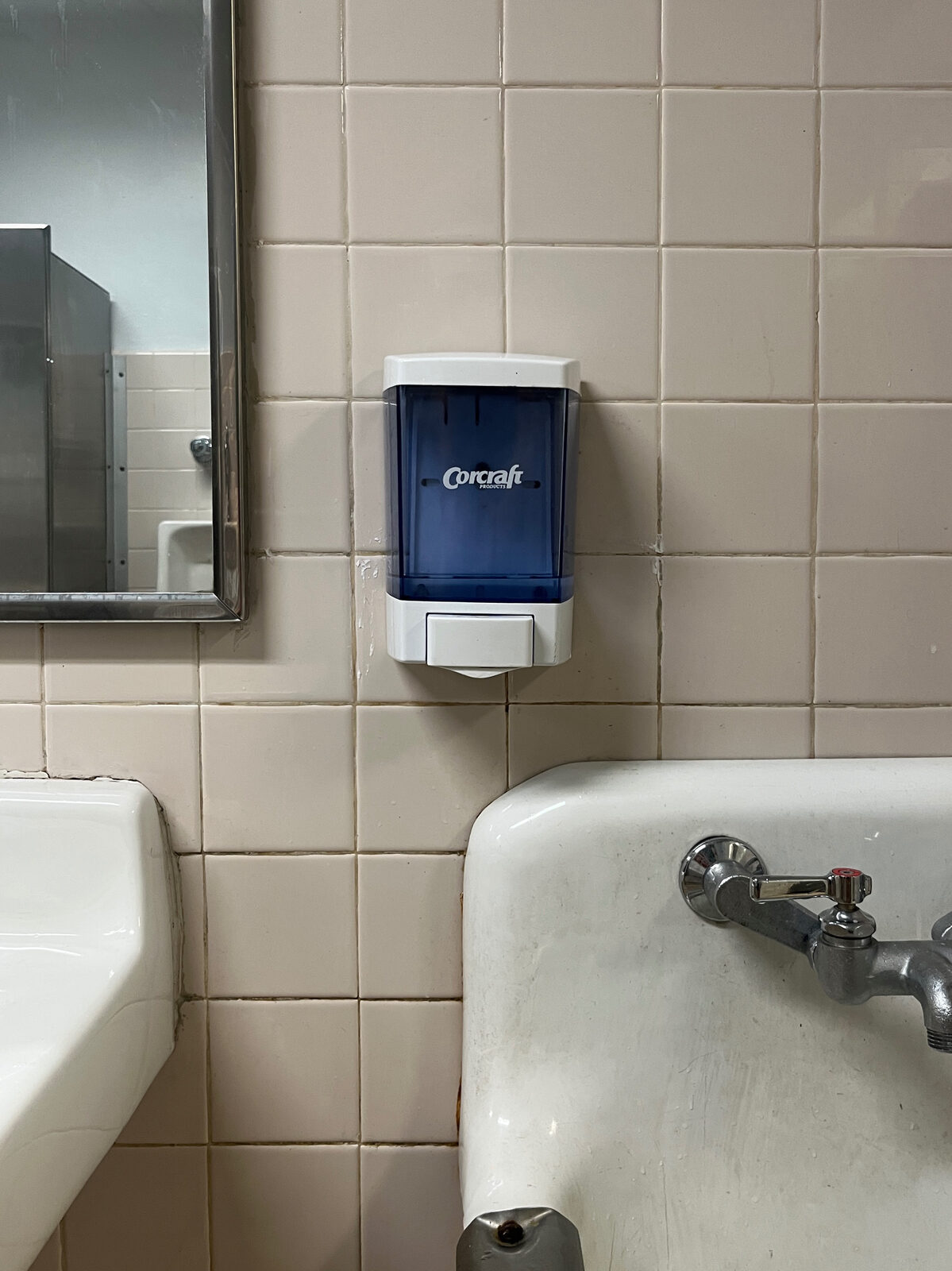
People skip the sink when the soap dispenser is empty, jammed or awkward to use. For facility managers, the choice is less about the brand on the cover and more about format, placement and how often someone has to refill it. This applies in offices, schools, restaurants and light industrial sites.
Start with the soap format
Dispensers are built for a specific product: bulk liquid poured from a jug, a sealed cartridge, or foam. They are not interchangeable. A cartridge that does not seat will leak, and foam soap in a liquid pump will not dose properly. Match the dispenser to the soap you already buy, or change both at once.
Manual, push-bar or no-touch
A manual push unit is simple and has no batteries. It also gets grimy around the button in busy washrooms. A no-touch unit keeps hands off the housing, but it needs power, either batteries or a hard-wired supply, and a sensor that actually sees a hand. Walk the room after install. If the sensor fires when someone walks past, you will burn through soap.
Size the reservoir to traffic
A small reservoir in a high-traffic washroom means extra trips. A large one in a quiet staff washroom sits long enough that the soap can thicken or separate. Note how many times a week each unit is refilled for a month, the same way you track paper on the washroom restocking checklist. If one location is always empty, the reservoir or the route is wrong, not the users.
Put it where a wet hand can reach it
Mount the dispenser beside the sink, not across the room, and within reach of the people who use that washroom. In Canada, operable parts in accessible washrooms have to meet the code that applies to the building, often the provincial building code and CSA B651. Do not copy a height from a US diagram and assume it is compliant here. Check the drawing before you drill.
What usually fails
- The pump clogs because the soap was swapped for a thicker product.
- The lock is broken, so the bottle walks away or gets contaminated.
- Staff refill with whatever is in the closet, and the next jug does not fit.
Hand washing only helps when soap is actually there. The Canadian Centre for Occupational Health and Safety explains why in its guidance on hand washing and reducing the risk of common infections.
Bottom line
Pick the dispenser for the soap you will keep buying, size it to the refill route, and mount it where people can use it with wet hands. Browse our dispensers for paper systems that sit in the same washroom, and read how to choose a paper towel dispenser so the drying side matches.
Leave a Reply